From Coding to Orchestrating: The Paradigm Shift in Software Engineering
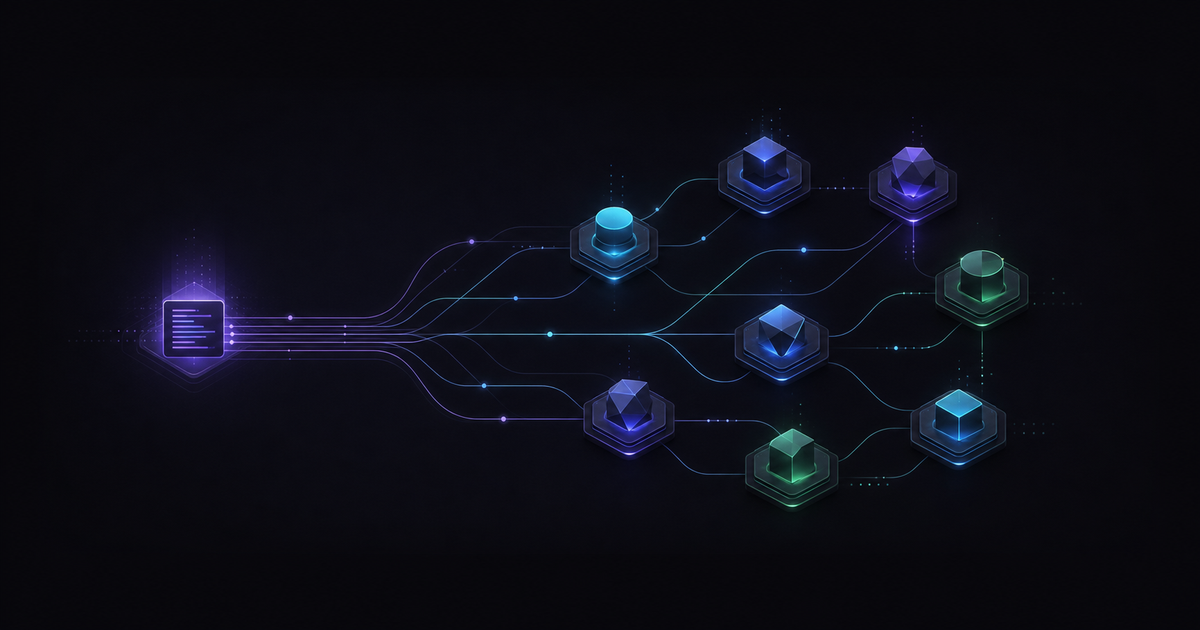
For decades, software engineering has meant one thing: hours at the keyboard. Learning syntax. Debugging edge cases. Writing the same boilerplate for the hundredth time. The craft was defined by how fast you could type, how well you could hold complex systems in your head, and how many late nights you were willing to endure.
That era is ending — but not in the way most people expect.
The Old Model: Engineer as Implementer
The traditional software engineer was, fundamentally, an implementer. You received requirements — sometimes clear, often not — and translated them into code. Line by line. Function by function. The value you provided was your ability to produce working software through sheer effort and expertise.
This model had clear metrics:
- Lines of code written
- Features shipped per sprint
- Bugs fixed per week
And it had clear costs:
- Burnout from endless implementation work
- Context-switching overhead between tasks
- Knowledge silos as systems grew too complex for any one person
The best engineers weren’t just fast typists — they were the ones who could architect systems, mentor juniors, and see around corners. But the job still required them to spend most of their time doing rather than directing.
The Shift: Engineer as Orchestrator
AI agents are changing this equation — in theory.
When an agent can write a React component in seconds, the question stops being “can I implement this?” and becomes “should I implement this, and if so, how should I direct the agent to do it correctly?”
This is a fundamentally different skill set:
| Old Model | New Model |
|---|---|
| Write code | Specify intent |
| Debug syntax errors | Review agent output |
| Memorize APIs | Define constraints |
| Work in isolation | Orchestrate agent teams |
| Measure by output volume | Measure by outcome quality |
The engineer’s role shifts from implementer to orchestrator. You’re no longer the one typing — you’re the one deciding what gets typed, reviewing what was produced, and ensuring it meets your standards.
But there’s a problem.
The Memory Problem No One Talks About
CLI agents and IDE copilots plan in memory, then discard everything when the session ends.
That context you painstakingly built? Gone. The reasoning behind a decision? Lost. Your team’s conventions? Re-explained every single session.
This is why most engineers feel like AI agents are impressive demos that don’t scale to real work. The agent forgets. You repeat. The agent forgets again. Eventually you stop trying.
Current workarounds (and why they don’t scale)
The industry has tried to solve this with file-based context:
AGENTS.md / CLAUDE.md files — Markdown files the agent reads at session start. Better than nothing, but:
- No enforcement — the agent may or may not follow what’s written
- No assignment — every agent gets the same blob of context
- No composability — one massive file that grows unwieldy
- No visibility — you can’t inspect what an agent actually knows
Project skills and rules — IDE-specific configurations that add context. Problems:
- Vendor lock-in — skills don’t transfer between tools
- No governance — no way to version, review, or share across a team
- Session-scoped — the agent doesn’t learn from corrections
System prompts and context files — Copy-pasted instructions at the start of every session:
- Manual and error-prone
- Drift between team members’ prompts
- No traceability — you can’t see what was applied to a given session
These approaches share a fundamental flaw: they treat context as a text file, not as infrastructure.
When your conventions live in a markdown file that agents optionally read, you’re hoping for compliance. When your conventions are encoded as capabilities assigned to specific agents, you’re enforcing behavior.
To be clear: capabilities don’t give agents “memory” — agents still start fresh each session. But here’s what capabilities do differently:
- Composed — Small, focused prompts that layer instead of one massive file
- Assigned — Specific capabilities to specific agents, not a blob for everyone
- Deterministic — Same capability assignment = same behavior, every time
- Inspectable — You can see exactly what any agent will receive before it runs
The shift to orchestration isn’t about making agents remember. It’s about making consistency automatic — so you stop repeating yourself and start compounding expertise.
This is the gap that needs to be filled: making orchestration structured, composed, and enforceable instead of ad-hoc and hope-based.
What Orchestration Actually Looks Like
This isn’t about prompting ChatGPT and hoping for the best. Real orchestration requires structure — and that structure needs to persist.
This is where Valdr comes in: making orchestration explicit, repeatable, and traceable instead of ad-hoc and ephemeral.
flowchart LR
    CAP["`🧠 **CAPABILITIES**
    Encode expertise
    *How agents should work*`"]
    PLN["`📋 **PLANS**
    Capture intent
    *What needs to happen*`"]
    TSK["`✅ **TASKS**
    Track execution
    *What's being done*`"]
    SES["`📊 **SESSIONS**
    Provide evidence
    *What actually happened*`"]

    CAP --> PLN --> TSK --> SES

    style CAP fill:#d4edda,stroke:#28a745,color:#000
    style PLN fill:#cce5ff,stroke:#007bff,color:#000
    style TSK fill:#e2d5f1,stroke:#6f42c1,color:#000
style SES fill:#fff3cd,stroke:#ffc107,color:#000Each layer compounds the one before it. Let’s break them down.
1. Capabilities: Institutional Knowledge as Agent Infrastructure
Here’s the insight most AI tools miss: your team has years of accumulated expertise — coding conventions, component libraries, API patterns, architectural decisions. This knowledge lives in your head, your code reviews, your tribal lore.
Capabilities encode this expertise into prompts that agents always follow. “Always use our CustomDropdown, not native <select>.” “Follow our API naming conventions.” “Guard against these specific security patterns.”
Once encoded, you never re-explain it. The agent knows your conventions because you’ve made them part of who the agent is.
2. Plans: Intent That Persists
Agents don’t read minds. The more precisely you can specify what you want — requirements, constraints, success criteria — the better the output.
But unlike chat prompts, plans in Valdr persist beyond the session. Requirements trace forward to tasks. Tasks trace back to requirements. Weeks later, you can see exactly what was intended and why.
3. Reviews: Human Judgment at the Right Points
Agent output isn’t automatically correct. It needs review. It needs testing. It needs human judgment about whether it actually solves the problem.
This is where engineering expertise still matters — you’re evaluating, not just accepting. Reviews in Valdr are explicit gates, not afterthoughts.
4. Sessions: Evidence of What Happened
When something goes wrong, you need to understand why. Sessions capture what agents did — not just what they said, but what decisions were made and what context informed them.
This turns agent work from a black box into traceable execution.
A Concrete Orchestration Example
Here’s how orchestration actually works in Valdr:
Capability setup (once): You encode your team’s TypeScript testing standards into a capability — coverage requirements, Vitest patterns, regression guards. This takes 30 minutes and never needs to be repeated.
Plan creation: You describe what you want to build. Valdr’s Planner structures this into requirements, constraints, and success criteria. The plan persists — it’s not ephemeral chat.
Task generation: Tasks are created from the plan, each linked to specific requirements. The agent assigned to a task automatically inherits your testing capability.
Execution with context: The agent writes code that follows your conventions without being told. It uses Vitest, not Jest. It targets 90% coverage. It guards against regressions. Because that’s what the capability says.
Review and evidence: A reviewer agent (or human) checks the work. The session captures what happened. If something needs to change, the feedback is traceable.
Compounding value: Next time, the same capabilities enforce the same conventions. The plan is still there to reference. Every capability you encode saves future sessions.
Orchestration is not prompting. It’s system design with enforced consistency.
The Skills That Matter Now
If implementation is increasingly automated, what do engineers actually need to be good at?
Systems thinking. Understanding how components fit together, where complexity lives, and what architectural decisions will compound over time. Agents can write code, but they can’t (yet) design systems.
Requirements clarity. The ability to translate vague business needs into precise specifications. If you can’t explain what you want clearly, no agent will figure it out for you. This is exactly what Valdr’s Planner helps you structure.
Quality judgment. Knowing whether code is good — not just whether it runs, but whether it’s maintainable, secure, performant, and aligned with team conventions. This expertise doesn’t disappear — it gets encoded into capabilities.
Knowledge encoding. The ability to capture what your team knows and turn it into agent infrastructure. This is a new skill entirely — and it compounds over time as your capability library grows.
Domain expertise. Agents are general-purpose. Your knowledge of your specific domain — the business logic, the edge cases, the historical context — is what makes their output actually useful. Capabilities make this knowledge portable.
The Uncomfortable Truth
This shift is uncomfortable because it challenges identity.
Many engineers define themselves by their ability to write code. The satisfaction of solving a hard problem, the flow state of deep implementation work, the craft of elegant solutions — these are real and meaningful.
But the question isn’t whether you can still write code. It’s whether spending your time that way is the highest-leverage use of your expertise.
When an agent can produce 80% of what you’d write in 5% of the time, the remaining 20% — the review, the refinement, the architectural guidance — becomes where you add the most value.
When code is cheap, judgment becomes the product.
This isn’t a demotion. It’s an elevation. The engineer becomes the expert who directs the work, not just the worker who does it.
What This Means for Teams
The implications extend beyond individual engineers:
Smaller teams, bigger output. If each engineer can orchestrate multiple agents, teams can accomplish more with fewer people. This is already happening.
New review workflows. Code review shifts from “did you write this correctly?” to “did you orchestrate this correctly?” The questions change: Was the right capability applied? Were the requirements clear? Does the session show proper governance?
Institutional knowledge becomes competitive advantage. Teams that encode their conventions, patterns, and tribal knowledge into capabilities will outperform teams that start from scratch every session. In Valdr terms: your capability library is your moat.
Quality becomes the differentiator. When everyone can generate code quickly, the teams that win are the ones with better review, better governance, and better judgment about what to ship. Traceable execution makes this visible.
The Path Forward
This shift won’t happen overnight. Many tasks still require deep implementation work. Many teams aren’t ready for agent orchestration. The tooling is still maturing.
But the direction is clear.
The engineers who thrive will be the ones who:
- Embrace orchestration as a skill to develop, not a threat to resist
- Invest in systems thinking and requirements clarity
- Encode their expertise into capabilities that compound over time
- Build traceability into their agent workflows from day one
The keyboard isn’t going away. But its role is changing — from the primary interface for production to one tool among many in an orchestrated workflow.
The question isn’t whether this shift is coming. It’s whether you’ll be directing it or displaced by it.
Start With One Capability
Here’s a concrete first step: audit your last 10 agent sessions. What context did you repeat? What conventions did the agent ignore? What tribal knowledge did you re-explain?
Pick the most frequent pain point. Encode it as a capability. Assign it to your agent.
Watch the agent follow your rules without prompting.
That’s the difference between ad-hoc prompting and orchestration with enforced consistency. That’s what Valdr makes possible.
Valdr is a control plane for engineers who use AI agents in real work. Capabilities encode your expertise. Plans persist your intent. Sessions capture evidence. See how it works →